
Manchester United lost their first game of the season against last year’s runners-up Arsenal 1:0. A disappointing result but a promising performance. The Red Devils generated more xG (1.52 – 1.31) and registered 22 total shots. Combined with 61% possession it was one of their better games under Ruben Amorim. Let’s dive in.
First phase
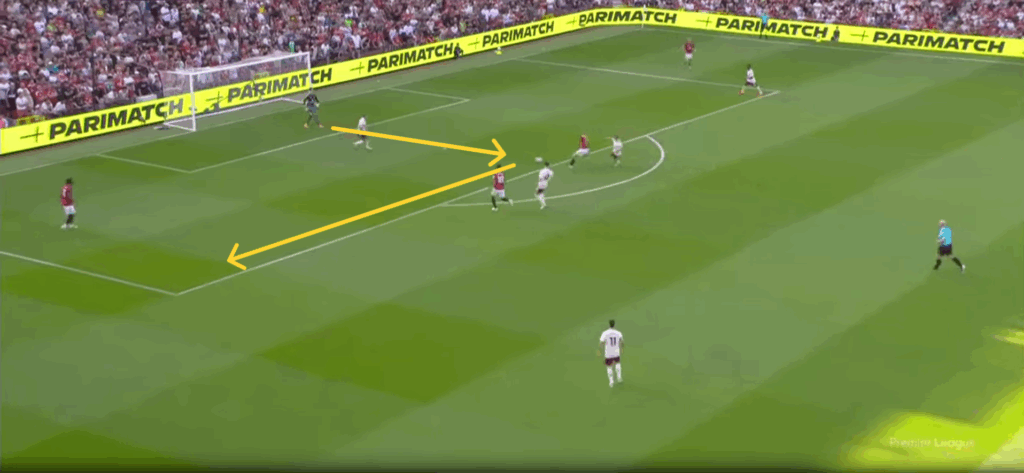
Manchester United approached the match with a clear plan in their build-up play. In the first phase, the centre-backs split wide while De Ligt, playing as the central centre-back, often stepped into the pivot role. This movement created a diamond with Bruno Fernandes advanced, giving United a structure to progress through the first line of pressure. While they did attempt to play out from the back, this mostly occurred when they were able to lure Arsenal forward. Whenever the ball was recycled back to Bayindir, the goalkeeper, United frequently decided to go long, aiming to exploit space behind the press or to find a free man.
Bayindir played an important role here, often looking for a bounce pass through De Ligt to Leny Yoro who was playing as the right centre back. This gave the Frenchman the opportunity to carry the ball. Yoro carried the ball 195 metres throughout the game which was only second to Bryan Mbeumo. The general intention in possession was to be as direct as possible while still playing on the ground, rather than circulating the ball passively.
Second phase
In the second phase, Manchester United‘s shape shifted into a more classic 3-2-2-3 structure. This was not symmetrical, however, as the left side and right side functioned differently. On the left, Dorgu held an advanced and very wide position on the last line, while Dalot stayed deeper on the opposite side. This tilted the back three towards the left and gave them a clear route to progress down that flank. Casemiro and Bruno Fernandes provided a staggered double pivot, which created passing lanes to bypass Arsenal’s midfield press, often through bounce passes that allowed them to progress step by step. United consistently sought to move the ball from one flank to the other, using the width of Dorgu on the left and Mbeumo on the right to stretch Arsenal’s shape.
Final third
Reaching the final third was not the problem for Manchester United. The real issue came once they arrived there. Neither Arsenal’s centre-backs nor their box were consistently occupied by a true striker presence. Matheus Cunha frequently dropped into midfield to create a numerical advantage in deeper areas, and Mason Mount also preferred to come short rather than run in behind. This meant that when United worked the ball into crossing or shooting positions, they often lacked numbers inside the box. The width provided by Dorgu and Mbeumo gave the team good attacking outlets, but these players were left isolated too often without central runners to connect with. As a result, promising approach play did not translate into a consistent end product.
Out of possession
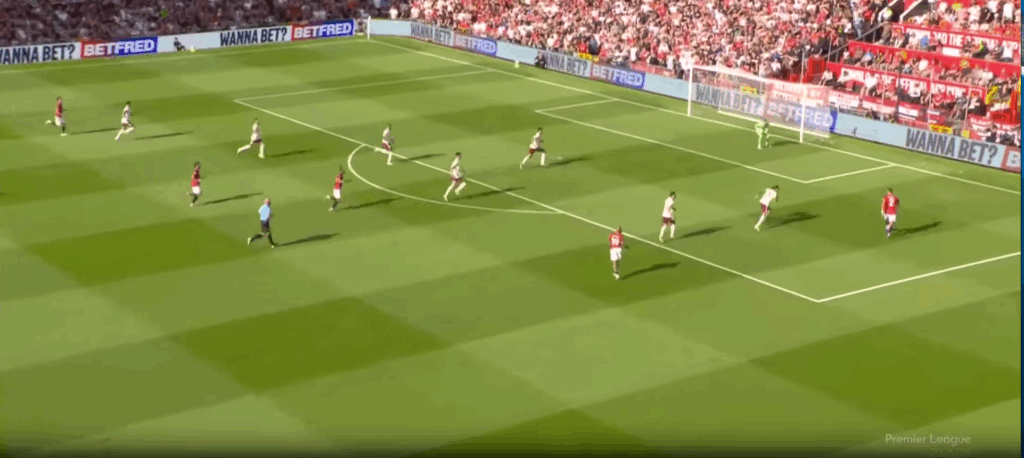
Out of possession, Manchester United showed far more intensity than in many of their previous performances. Their counterpressing was particularly effective thanks to the shorter distances between players in central areas, which allowed them to quickly win the ball back immediately after losing it. In the high press they adopted a 2-3 structure, which successfully shut down passing options through the middle and provided good access to the flanks due to the lateral positioning of three players across. The central midfielders were aggressive in stepping out to support the press, which proved crucial in maintaining the team’s compactness. However, when United dropped deeper into a low or mid block, they struggled more. The 5-2-3 shape they adopted out of possession left gaps that Arsenal could exploit, and maintaining a stable defensive line of five proved difficult at times.
In many situations a back four would have allowed Manchester United to apply more pressure to Arsenal‘s back-line and their flanks. With Luke Shaw at left centre back and Patrick Dorgu at left wing back, they had the personnel to switch to a back four out of possession. Defending in a 523, Arsenal had loads of space on the flanks, particularly down the left, where Calafiori constantly found himself in space to progress the ball.
Transitions
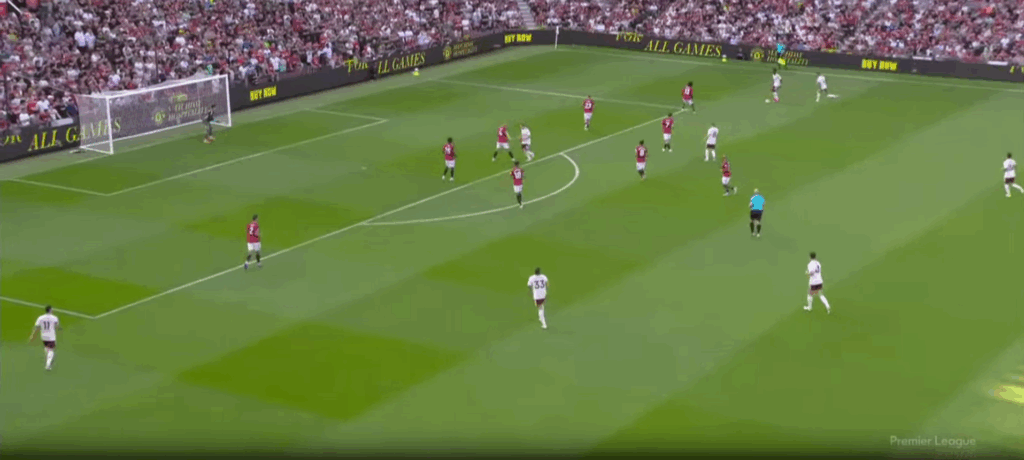
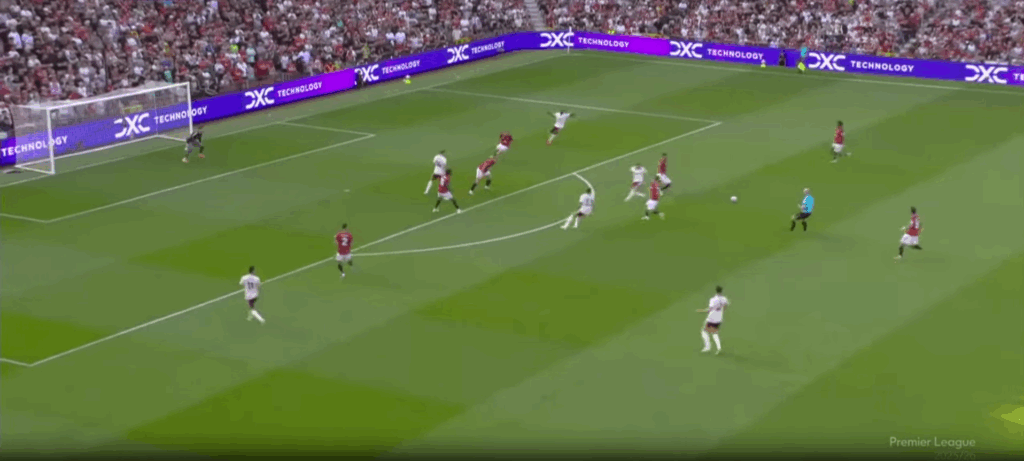
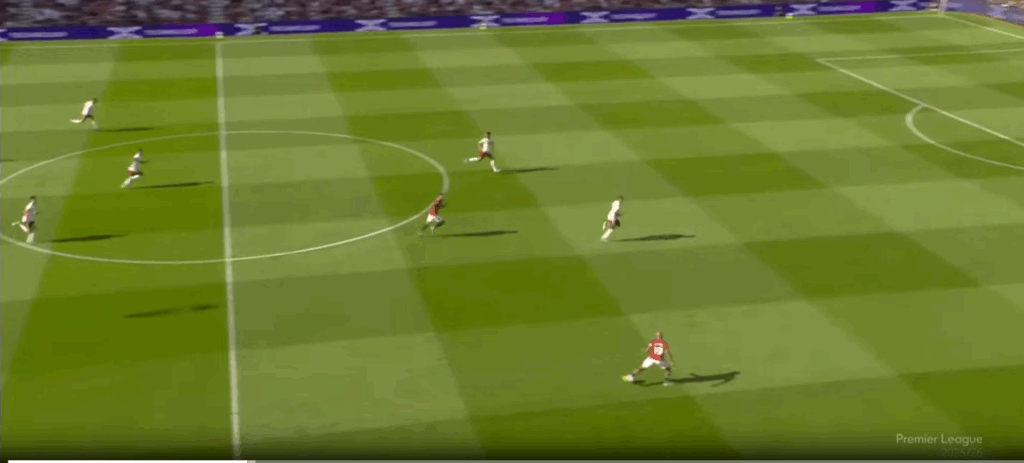
Transitions were one of the clearest strengths of Manchester United’s performance and a heavy focus in this match. Once they won second balls, the immediate instinct was to play in behind as quickly as possible. The positioning of Dorgu and Mbeumo was particularly important in this respect, as both stayed wide even without the ball, providing instant outlets for counter-attacks. This gave United significant transitional power, as they could turn defensive recoveries into dangerous attacking moves within a few passes.
Final thoughts
This was a much better performance from Manchester United than anything seen last season under Ruben Amorim. The high press was compact and aggressive, and their in-possession structure looked far clearer. Matthijs de Ligt had a fantastic game in the central centre-back role, stepping into midfield with confidence. It was by no means perfect, but it was certainly promising. United still need to improve their setup in low blocks, as Arsenal could have been far more dangerous had they been sharper on the day.